Home Blog Page 4

Eight Trends Shaping 2026 Health Care Costs


rewrite this content and keep HTML tags

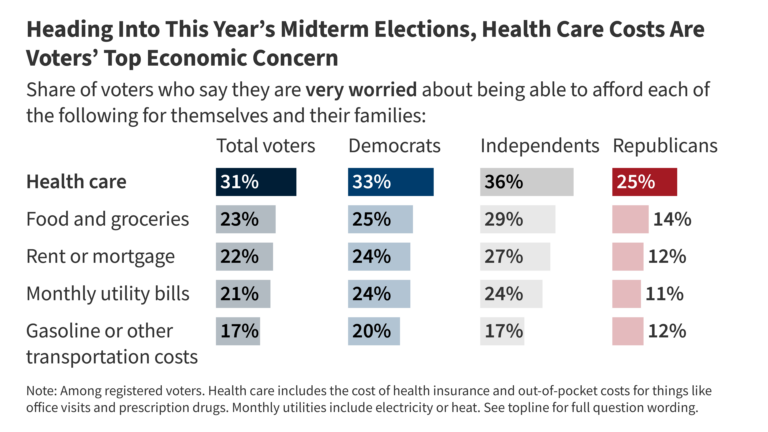
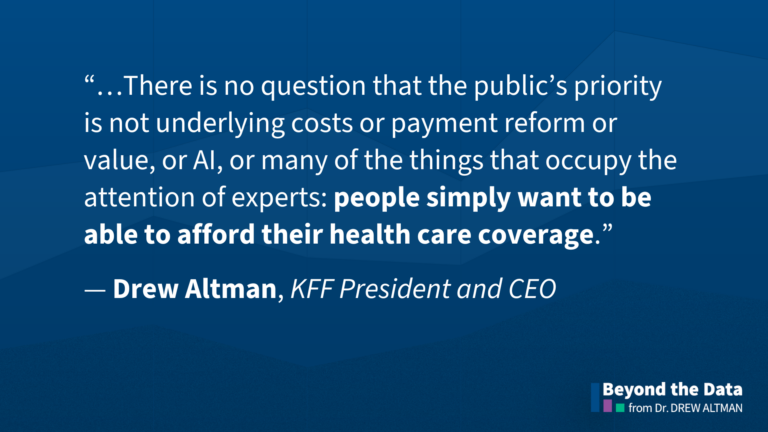
Health care affordability is top of mind for many Americans, rising well above other necessities based on recent KFF polling.

A new Peterson-KFF policy explainer lays out the health care trends shaping the 2026 policy debates, including rising premiums, spending on prescription drugs, health care price transparency and consolidation, artificial intelligence in health care, and Medicaid funding cuts and other key program changes.

This brief is available through the Peterson-KFF Health System Tracker, an online information hub dedicated to monitoring and assessing the performance of the U.S. health system.


Source link

Are the Tradeoffs from Prior Authorization Worth It? 


rewrite this content and keep HTML tags

Costs are the health care problem that most worry the American people. But nothing makes American health care consumers more frustrated using the health system than prior authorization review. I know because they told us that, ranking prior authorization review far ahead of any other problems they have getting care and navigating the health care system, including getting appointments and understanding their bills. Four in 10 people with chronic conditions say it’s their single biggest burden getting health care.

Four in Ten Insured Adults With a Chronic Condition Say Prior Authorization Is Their Single Biggest Health Care Burden Beyond Costs

Take Medicare Advantage plans as a case in point. In 2024, they did 53 million prior authorization reviews, almost two per enrollee, turning down 7% of them. You know what it can take to get approvals. Often, countless phone calls and messages in apps to your insurance company and doctor’s office, ending up in some cases with a “peer-to-peer” review between the doctor and the insurance company (are they “peers” in this relationship?). Stress. Delay. Sometimes hours on the phone or days waiting for a call back. And sometimes, the result is an approval only to discover that the venue is denied or out of network, or the quantity of a drug the patient has taken for years requires a separate annual prior approval. The problem isn’t limited to Medicare Advantage, it’s common throughout the insurance system, except for traditional Medicare (more on that below).

Health professionals also dislike prior authorization, especially specialists who order more expensive tests and procedures and have to run the gauntlet of the prior authorization process to get them approved. Their administrative staff does battle daily with insurance company staff over them. More and more, provider AIs and insurance company AIs try to outmaneuver one another over reviews. Everyone thinks they are holy in this tug of war: the doctors who see the insurance companies as greedy profiteers trespassing on their professional judgment, and the insurers who see themselves as the line of defense against doctors who often don’t follow guidelines for best practices or have a financial stake in doing more in a fee-for-service system.

There is some disagreement about whether prior authorization review reduces costs for payers and protects quality by denying unnecessary services or shifting care to equally effective, lower-cost services, or whether it increases costs and leads to adverse outcomes over time by delaying or denying needed care, and studies are available to support either claim. This is not the place for a literature review, except to say prior authorization can and does do both. There should be no debate, however, that it adds to the complexity of our health system, frustrates patients and providers, and drives up administrative costs.

The assumption has been that we are stuck with this. Payers have few tools to control costs in our system, and prior authorization is one of them.  But with such profound public angst about it, it’s time to ask if it’s worth the tradeoffs.

Current efforts to change prior authorization review focus on incremental reforms aimed at making it less onerous. States have introduced a range of reforms to streamline prior authorization review, exempting physicians with good track records from review, suspending prior authorization for ongoing care for some people with chronic conditions, requiring that physicians double-check reviews made by insurance company AIs, and more.  The Trump administration has joined the fray, too, announcing a voluntary effort with big health insurance companies to speed up and simplify prior authorization review, including reforms that promise to cut back on what is reviewed and how often. We should begin to see how real this voluntary effort is this year. 

The bigger question, though, is: could we get rid of prior authorization entirely? I can’t think of anything that would be more politically popular for a candidate planning a midterm or 2028 platform on health, although debate about whether premiums would rise, fueled by insurers, could reduce enthusiasm somewhat.

One approach I used to discuss with my friend, the late Uwe Reinhardt, the great health economist and a frequent critic of insurance companies, was to take prior authorization review out of the hands of insurance companies altogether, setting up independent nonprofit physician-led organizations to take over the job. That would remove the incentive insurance companies have in the current system to put profits over patients. It is, however, trading one big and already established corporate bureaucracy for an entirely new nonprofit one that would have to be constructed and funded across the country (I assume it could be funded mostly by a tithe on health plans much like ACA Marketplaces are).

As health policy historians among us will know, we tried something like that years ago and while it didn’t operate as prior authorization does today, the experience was instructive. It was called the Professional Standards Review Organization (PSRO) Program, and it was administered by CMS (then HCFA) through its Health Standards and Quality Bureau.  PSROs—physician-led nonprofit organizations across the country funded by Congress—attempted to control costs by reviewing hospital admissions and hospital stays, with a negative determination resulting in denial of reimbursement by Medicare or Medicaid. Eventually, the program was deemed to cost more than it saved and was repealed in 1982, when the focus shifted generally from costs to quality in a more anti-regulatory environment.  

Another approach would be to follow traditional Medicare, which doesn’t do prior authorization review except in very limited cases.  Insurers will be quick to argue that premiums will rise even more without prior authorization review. They may be right, even if it also drives up costs for the health system in the long run by delaying and denying some needed care and adding administrative costs. One study by Milliman, which I discussed in an earlier column, calculated the ranges for potential premium increases. It’s also possible that prior authorization has a deterrent effect on physicians and hospitals just by being there, which no one has calculated.

But it’s non-trivial that traditional Medicare has operated almost entirely without prior authorization review. Only recently did the Trump administration—some would say counter intuitively with prior authorization now so unpopular—decide to experiment with introducing it through a demonstration project called WISeR, the Wasteful and Inappropriate Service Reduction Model, to test out prior authorization for selected services in six states. WISeR reviews, perhaps surprisingly given public distrust, are mostly to be driven by AI, which is considered a virtue by its proponents.

Medicare was able to get by without prior authorization largely by paying providers considerably less than private insurance pays them, rather than by reviewing every procedure, test, or prescription to try to manage costs. It suggests a Medicare-like approach as one option: eliminate prior authorization review in return for a reduction in payments to providers (say 2%, for the sake of illustration). In effect, it would constitute a bargain, trading modestly lower payments for greater professional autonomy and lower administrative costs for physicians.  It could be tried on a voluntary basis by a big self- insured employer, through a public program or systemwide. I am not sure if providers would welcome the deal or not. The burdens of prior authorization review do not fall equally on all practices and providers. I do know that, depending on which kinds of physicians are surveyed, between a third and half of physicians say they would not enter medicine if they had it to do over again, largely because of the perceived loss of professional autonomy. Hospitals would mainly benefit from reduced administrative costs and could have less interest. The idea would not be simple to implement.

Any move away from fee-for-service payment could also diminish the need for prior authorization review by reducing the incentive to provide more services. In integrated systems like Kaiser Permanente (no connection to KFF), doctors on salary don’t have a financial incentive to provide more care and the medical group they are part of makes the judgments about evidence-based care.

Every health policy change has tradeoffs. There are only so many tools payers have now to throw at health care costs, and prior authorization is one of them. But in a health system plagued as much by complexity as high costs, it is now public enemy number one for health care consumers, especially consumers who become patients and need a lot of care. The serious question we are not asking is whether the benefits it has for short-term cost control for insurers and their clients are worth the costs to patients and health professionals in an already labyrinthian health care system?  

So, the big question: with all the tradeoffs, would you get rid of prior authorization review, or stick with the path we are on now, incrementally trying to make it slightly better?

View all of Drew’s Beyond the Data Columns


Source link

I can’t afford health insurance and don’t qualify for Medicaid. What can I do?


rewrite this content and keep HTML tags

For people who buy their own health insurance, premiums rose significantly in 2026 after Congress failed to extend federal subsidy enhancements that expired at the end of 2025. Stories of consumers facing unaffordable health insurance premiums are widespread. You’re not alone if you feel like you can’t afford health insurance.

Why you might not qualify for Medicaid

We’ll discuss private health insurance in a moment, but if health coverage feels unaffordable and you’re also not eligible for Medicaid, you might have wondered why you can’t enroll in Medicaid. There are a few reasons this might be the case:

  • You might be in a state that hasn’t expanded Medicaid under the ACA (more about that below).
  • Your income might be above the eligibility cut off for Medicaid.
  • You might be a recent (within the last five years) immigrant.
  • Your kids might be Medicaid/CHIP-eligible but you might not be, because the income limits are higher for kids.

Now let’s take a look at a few scenarios to explain why you might be facing unaffordable health insurance premiums, and what you might be able to do about it.

Scenario 1: You earn too much to qualify for a subsidy

The “subsidy cliff” returned in 2026, due to the expiration of the federal subsidy enhancements. This means that federal premium subsidies (premium tax credits) are no longer available to Marketplace enrollees with household income above 400% of the federal poverty level (FPL), regardless of how expensive their coverage options are. (Note that state-funded subsidies do extend above 400% of FPL in Connecticut, New Jersey, and New Mexico.)

What can you do to qualify for subsidies?

If you lost your subsidy altogether at the end of 2025, it’s likely because your household ACA-specific Modified Adjusted Gross Income (MAGI) is over 400% of FPL. (For 2026 coverage in the continental United States, that means you earn more than $62,600 for a single person, or more than $128,600 for a family of four).

Eligibility for a federal Marketplace premium tax credit requires that a household’s Modified Adjusted Gross Income (MAGI) be at or below 400% of the Federal Poverty Level (FPL). Depending on how far above this threshold your projected income is, it may be possible to bring your MAGI within the required range. This is generally done in one of two ways:

  • Adjusting projected income if you are working fewer hours, taking on fewer clients, or otherwise earning less.
  • Reducing MAGI through allowable tax deductions, including contributions to pre‑tax retirement accounts or health savings accounts.

If your income is too high to qualify for subsidies, you’ll pay full price for whatever plan you select. Here are some tips for choosing the plan that best fits your needs and budget.

If you’re not subsidy-eligible and you prefer a Silver plan, you might consider an off-exchange plan. These are ACA-compliant individual-market policies, but in most states, full-price Silver plans are less expensive off-exchange than on-exchange. This is because the cost of cost-sharing reductions is added to the premiums for on-exchange Silver plans in most states.

Premium subsidies are not available for off-exchange plans. But if you’re not eligible for subsidies due to your income, you won’t be giving up anything by opting for an off-exchange plan. (“Off-exchange” refers to fully ACA-compliant individual-market plans, and does not include non-ACA-compliant plans. Those are addressed in more detail below.)

If you prefer a Bronze or Gold plan, the full-price premiums for those plans are generally the same on-exchange or off-exchange because there are no CSRs impacting the price on or off exchange. But depending on where you live, there may be insurers that offer coverage only on-exchange or only off-exchange. So if you’re not subsidy-eligible, a comprehensive comparison of both on-exchange and off-exchange plans will give you a full picture of what’s available in your area.

(Regardless of whether you’re shopping on-exchange or off-exchange, you can complete the process yourself or do it with help from a broker, which won’t cost you anything.)

Scenario 2: You qualify for subsidies, but coverage still seems unaffordable

You’re certainly not alone if you’re in this category. Most Marketplace enrollees are still eligible for subsidies in 2026, but after-subsidy premiums were projected to more than double in 2026, due to the expiration of the subsidy enhancements at the end of 2025.

As noted above, enrollees with household income above 400% of FPL lost their subsidies altogether at the end of 2025, resulting in substantial premium increases. But even for those who still qualify for subsidies, the subsidies now cover a smaller share of enrollees’ total premiums. To continue to have Marketplace coverage in 2026, these enrollees must either pay higher premiums, downgrade their coverage, or both.

KFF surveyed Marketplace enrollees in November 2025, asking what they would do when confronted with net premiums that were more than doubling. More than half indicated that they would either select a plan with lower premiums but higher deductibles and co-pays, or drop their coverage altogether.

If your coverage feels unaffordable even with subsidies, there are a couple of options to make it more affordable:

  • Reduce MAGI. As long as your MAGI stays above the Medicaid eligibility threshold in your state (and doesn’t drop below 100% of FPL), a lower MAGI will result in a larger subsidy. You can use a subsidy calculator to see how changes in your MAGI will affect the size of your subsidy.
  • Downgrade to a plan with a lower premium. Several state-run Marketplaces have published data on 2026 plan selections, and there was a clear trend towards higher enrollment in Bronze plans (which have higher out-of-pocket costs but lower premiums than Silver or Gold plans). But at this point, most current enrollees won’t have an opportunity to change their coverage for the rest of the year, as open enrollment for 2026 has ended and most special enrollment periods limit current enrollees to a different plan at the same metal level as their current plan.

Scenario 3: You’re in the coverage gap

The coverage gap is not new in 2026. It has always existed in nine states that haven’t expanded Medicaid as called for in the ACA: Alabama, Florida, Georgia, Kansas, Mississippi, South Carolina, Tennessee, Texas, and Wyoming. Because those states have chosen not to expand Medicaid, many adult residents with income below the federal poverty level are not eligible for any financial assistance with their health coverage and are not eligible for Medicaid.

Learn more about the coverage gap.

What can you do to qualify for financial assistance?

If you’re an adult in one of those nine states and your income is below the federal poverty level, you’re not eligible for Marketplace subsidies. You may find that you’re not eligible for Medicaid either (unless you’re pregnant or the parent of a minor child, although Medicaid income rules for this vary by state).

To become eligible for Marketplace subsidies, you would need an ACA-specific modified adjusted gross income (MAGI) of at least 100% of the prior year’s FPL.

For 2026 coverage, that’s $15,650 for a single adult, or $21,150 for a household of two.

Note: If you’re in a coverage gap state and you enter an income below the FPL on the Marketplace plan comparison tool, it will tell you that you aren’t subsidy eligible, but it won’t tell you why. The reason is that your income is below the FPL.

Here’s how MAGI is calculated under the ACA. Note that it’s gross income, rather than take-home pay, and it’s different than the MAGI used for other purposes.

Be sure to include all income, and remember it’s household income, not just your own income.

If you’re in the coverage gap and your income increases to at least the FPL, you’ll qualify for a special enrollment period to enroll in a Marketplace plan.

Medicaid eligibility varies by state, with the states that expanded Medicaid eligibility under the Affordable Care Act covering a much greater portion of the low-income adult population. If you’re affected by the coverage gap, you may find that you’d actually be eligible for Medicaid if you lived in one of your neighboring states.

Starting in 2027, Medicaid recipients in expansion states will face a work requirement (nationwide), which will require at least 80 hours per month of work or other community engagement.

Scenario 4: You cannot afford ACA-compliant health insurance

If you’ve tried all of the above strategies and can’t make an ACA-compliant health plan work with your budget, you may have already dropped your coverage or be planning to do so soon.

There are some additional coverage options you may consider, which might be better than going without any coverage at all. None of these alternatives is regulated by the ACA. Some aren’t considered insurance at all, and thus aren’t subject to a state’s insurance laws. Because these plans aren’t ACA-compliant, they don’t have to cover the essential health benefits, typically exclude pre-existing conditions, and generally have annual and lifetime benefit caps. But depending on your circumstances and budget, they may pay for some health care costs that you would otherwise pay entirely out-of-pocket if you had no coverage at all. It’s important to review the plan details thoroughly before making a decision.

Non-ACA-compliant insurance options

These include short-term health insurance, fixedindemnity plans, and various types of supplemental coverage such as accident insurance and critical illness insurance. Short-term health insurance availability varies by state: In some states there are no plans available, while in others there are plans available with total durations of up to three years, including renewals. None of these plans are considered comprehensive coverage under the ACA.

Non-ACA-compliant options that aren’t considered insurance

There are a variety of “coverage options” that aren’t actually insurance, although consumers aren’t always aware of that. These include, for example, direct primary care memberships, Farm Bureau plans available in certain states, and health care sharing ministry plans.

The specific benefits vary from one plan to another. But since these types of coverage are not considered insurance, consumers who have problems with them cannot turn to the state insurance department for assistance.

Free and low-cost health care

Depending on your financial situation, you may qualify for free or low-cost care at a federally qualified health center. (Here’s a tool that can help you find one near you.)

Almost all hospital emergency departments are required to assess and stabilize patients regardless of their ability to pay. But the hospital can still bill you for the care you receive in the emergency department.

How to get help finding coverage

There are people online, on the phone, and in your community who can help you with the process of getting health coverage. You don’t have to pay anything for their assistance, as premiums are the same whether you have assistance or take a DIY approach. Here’s an overview of the help that’s available to you:

  • Agents and brokers can help with on-exchange or off-exchange plans. They receive a commission from the insurance carrier if they enroll you in a plan, but it doesn’t affect the price you pay.
  • Navigators and Certified Application Counselors (CACs) can help with on-exchange plans as well as Medicaid
  • The Marketplace call center can answer questions and help with enrollment. If you’re in a state that uses HealthCare.gov, the number is 1-800-318-2596. If you’re in a state that runs its own exchange (20 states plus DC), there will be a state-run call center.
  • The “find local help” tool on HealthCare.gov will let you see agents, brokers, Navigators, and CACs in your area. State-run Marketplaces have similar tools.
  • An Enhanced Direct Enrollment (EDE) entity can walk you through the enrollment process for an on-exchange or off-exchange plan. See a current list of approved EDE entities.
  • Dial 211. If you aren’t sure where to turn, calling 211 will get you to a local or regional call center that can connect you to helpful health coverage resources.

Louise Norris is an individual health insurance broker who has been writing about health insurance and health reform since 2006. She has written hundreds of opinions and educational pieces about the Affordable Care Act for healthinsurance.org.


Source link

Calculadora del Mercado de Seguros Médicos


rewrite this content and keep HTML tags

Las siguientes preguntas lo ayudarán a entender esta calculadora. Hay más disponibles en nuestra página de preguntas y respuestas sobre la reforma de salud.

¿Dónde puedo buscar ayuda para entender cómo me afecta la ley de salud?

Si tiene preguntas sobre cómo la reforma de salud lo afectará a usted y a sus opciones de seguros, por favor visite CuidadoDeSalud.gov, o llame al Centro de Ayuda al 1-800-318-2596 si tiene preguntas cuyas respuestas no están en el sitio web. También puede contactar al Programa de Asistencia al Consumidor de su estado, al mercado de seguros, o a la oficina del Medicaid con preguntas sobre inscripción y elegibilidad.

KFF no puede proveer asesoramiento individual sobre sus opciones de seguros. Sin embargo, sí proveemos algunas respuestas a preguntas frecuentes, junto con preguntas y respuestas más detalladas en nuestra página de preguntas frecuentes sobre la reforma de salud.

Estoy teniendo problemas para ver o entender mis resultados.  ¿Qué puedo hacer?

Podría ser que esté usando una versión desactualizada de Microsoft Edge o Firefox. Trate de adaptar los programas con una versión más moderna. ¿No está seguro qué versión del browser está usando? Haga clic aquí para Microsoft Edge o aquí para Firefox. Si sigue teniendo problemas técnicos con la calculadora luego de actualizar su browser, por favor contacte a la KFF.

Tenga en cuenta que no somos capaces de proporcionar asesoramiento o asistencia individual para entender sus resultados. Si tiene otras preguntas, le sugerimos que contacte para más información a CuidadoDeSalud.gov o al Mercado de Seguros de Salud de su estado.

¿La calculadora ha sido actualizada para el 2026?

S í, la calculadora ahora muestra las primas para el 2026 en todos los estados.

¿La calculadora provee resultados definitivos sobre lo que pagaré?

No. La calculadora le muestra un estimado de cuánto puede pagar y la cantidad de ayuda financiera para la que podría ser elegible si compra cobertura a través del mercado de seguros. Para averiguar si es elegible para asistencia financiera y para inscribirse, debe contactar a CuidadoDeSalud.gov, al Mercado de Seguros de Salud de su estado o la oficina del Medicaid.

Aunque la Calculadora del Mercado de Seguros de Salud se basa en las primas actuales para los planes vendidos en su área, hay muchas razones por las que los resultados que arroje la calculadora puedan no coincidir con la cantidad de crédito impositivo que recibe actualmente. Por ejemplo, la calculadora se basa completamente en la información que usted ingresa, mientras que el Mercado puede calcular su Ingreso Bruto Ajustado Modificado (MAGI, por sus siglas en inglés) como una cantidad diferente, o puede verificar su ingreso comparado con la información del año anterior.

¿Se ha actualizado la calculadora para tener en cuenta la expiración de los subsidios mejorados para las primas?

Sí, la calculadora estima cuánto puede pagar y la cantidad de asistencia financiera que recibirá  sin los subsidios mejorados para las primas vigentes, luego de su vencimiento a principios de enero.

¿Cómo funcionan los subsidios al seguro de salud?

Los subsidios son la asistencia financiera del gobierno federal para ayudarlo a pagar la cobertura o la atención médica. La cantidad de asistencia que recibe está determinada por sus ingresos y el tamaño de su familia. Hay dos tipos de ayuda para el seguro médico disponibles a través del mercado: el crédito fiscal para las primas y la reducción para los costos compartidos.

Los créditos impositivos a las primas y la reducción de costos compartidos. El crédito fiscal para las primas ayuda a reducir los gastos de la prima mensual. Este subsidio está disponible para personas con ingresos familiares superiores al 100% hasta el 400% del nivel federal de pobreza que adquieren cobertura a través de los mercados de seguros de salud. Estos individuos y familias pagarán entre el 2,1% hasta el 9,96% de sus ingresos por una prima del plan nivel medio (“Plata”). Todo lo que esté por encima de eso lo paga el gobierno. El monto de su crédito fiscal se basa en el precio de un plan Plata en su área, pero puede usar su crédito fiscal para las primas para comprar cualquier plan del mercado, incluidos los planes Bronce, Oro y Platino (estos tipos de planes diferentes se describen a continuación ). Puede elegir que su crédito fiscal se pague directamente a la compañía de seguros para que pague menos cada mes, o puede decidir esperar para obtener el crédito fiscal en una suma global cuando haga sus impuestos el próximo año. Las preguntas frecuentes de KFF brindan información adicional sobre cómo funcionan los créditos fiscales para las primas.

Las reducciones de costos compartidos lo ayudan con los costos cuando usted recibe cuidado de salud, como cuando va al doctor o tiene una internación. Estos subsidios sólo están disponibles para personas que compran su propio seguro y que ganan entre el 100% y el 250% del límite federal de pobreza (y algunos nativos americanos).

Si usted califica para la reducción de costos compartidos, deberá registrarse en un plan Plata para beneficiarse con esta opción. A diferencia del crédito impositivo a la prima (que puede ser utilizado en otros “niveles de metal”), esta ayuda sólo funciona con los planes Plata. Con la reducción de costos compartidos, usted todavía paga la misma baja tasa mensual del plan Plata, pero también se paga menos al ir al médico o por una estadía en el hospital de lo que pagaría de otra manera.

Para más información, por favor lea la pregunta sobre el valor actuarial más abajo. Si tiene preguntas específicas sobre su subsidio, puede consultar las páginas de preguntas frecuentes, o contactar a un asistente o navegador a través de cuidadodesalud.gov, o en el mercado de seguros de su estado.

¿Qué se incluye en el ingreso familiar? ¿Cómo sé que ingreso poner?

La calculadora del mercado de seguros de salud le permite poner los ingresos del hogar como una suma en dólares de 2026 o como un porcentaje del nivel federal de pobreza. Los ingresos del hogar incluyen los ingresos de la persona que paga los impuestos, del cónyuge y, en algunos casos, los hijos, denominados dependientes en las declaraciones de impuestos. A los fines de la calculadora, debe ingresar su mejor estimación de cuáles serán sus ingresos en 2026.

Cuando visite cuidadodesalud.gov o el sitio del mercado de seguros de salud de su estado, lo guiará a través de los pasos para calcular los ingresos de su hogar en base a salarios, intereses, dividendos, Seguro Social y otras fuentes de ingresos.

La elegibilidad para los créditos fiscales para las primas se basa en el ingreso bruto ajustado modificado de su hogar, o MAGI. Su declaración de impuestos más reciente mostrará su ingreso bruto ajustado (AGI). Para muchas personas, MAGI es igual o muy cercano al ingreso bruto ajustado. MAGI modifica su Ingreso Bruto Ajustado agregando cualquier beneficio de Seguro Social no exento de impuestos que pueda recibir, cualquier interés exento de impuestos que pueda ganar, y cualquier ingreso del extranjero que haya recibido que esté excluido de su ingreso para propósitos impositivos. El cálculo no incluye ingresos por donaciones, herencias, ingresos de seguridad suplementarios (SSI) y algunas otras fuentes de ingresos. Para obtener más información, consulte aquí.

¿Qué es el nivel federal de pobreza?

El nivel federal de pobreza varía de acuerdo al tamaño de la familia. Para la cobertura a través del mercado de seguros en el 2026, el nivel de pobreza usado es de $15650  para un adulto soltero y de $32150 para una familia de 4. El nivel federal de pobreza es más alto en Alaska y Hawaii.

¿Qué es el Medicaid? ¿Cómo se relaciona con la ayuda financiera a través del mercado de seguros de salud?

El Medicaid es un programa de seguro de salud (ofrecido a través de una alianza de los estados con el Gobierno federal) que ayuda con los costos médicos a algunas personas que tienen ingresos y recursos limitados. Los programas del Medicaid varían de estado a estado, pero la mayoría de los servicios de cuidado de salud están cubiertos a un costo mínimo o en forma gratuita. Si usted es elegible para el Medicaid, entonces no será elegible para subsidios en el mercado de seguros y necesita inscribirse en este programa.

Como resultado de la ley de salud, los estados tienen la opción de expandir la elegibilidad para el Medicaid para todas las personas con ingresos hasta el 138% del nivel de pobreza. Actualmente la mayoría de los estados han decidido expandir los programas del Medicaid.

Si usted vive en un estado que no ha expandido el Medicaid y espera que su ingreso esté por encima del nivel de pobreza, entonces usted podría ser elegible para subsidios a través de CuidadoDeSalud.gov o del mercado de seguros de su estado. Si espera que su ingreso esté por debajo del nivel de pobreza, entonces podría no ser elegible para asistencia a través del mercado de seguros. Sin embargo, podría ocurrir que usted todavía calificara para el Medicaid, bajo los criterios de elegibilidad de su estado, en particular si su ingreso es muy limitado y tiene niños, está embarazada o tiene alguna discapacidad.

La Calculadora del Mercado de Seguros de Salud toma en cuenta si su estado ha decidido o no expandir el Medicaid, por eso usted puede utilizar esta herramienta para estimar su elegibilidad para el Medicaid. De nuevo, tenga en mente que —aún si su estado no expandió el Medicaid— usted o algunos de los miembros de su familia pueden todavía ser elegibles para el programa.

Para averiguar si usted califica para el Medicaid, contacte a CuidadoDeSalud.gov, al mercado de seguros de su estado, o a la oficina del programa del Medicaid en su estado, para información sobre elegibilidad e inscripción.

¿Si soy elegible para el Medicare, puedo todavía inscribirme en el mercado de seguros?

No, no puede inscribirse para cobertura en el mercado de seguros si usted es elegible para el Medicare. La mayoría de las personas de 65 años y más son elegibles para el Medicare, el programa de seguro de salud gerenciado por el Gobierno federal. Si usted es elegible para el Medicare, aún si usted elige no inscribirse, no podría comprar cobertura a través del mercado de seguros.

Cuando se usa la Calculadora del Mercado de Seguros de Salud, si algunos miembros de su grupo familiar son elegibles para el Medicare y otros no, usted debería ingresar el tamaño completo de su familia (incluyendo a aquellos que son elegibles para el Medicare). Para la pregunta siguiente, por favor ingrese sólo a aquellos miembros de la familia que están inscribiéndose para cobertura a través del mercado de seguros (no ingrese a adultos que son elegibles para el Medicare).

Si usted tiene más de 65 años y todavía no es elegible para el Medicare por su estatus migratorio, puede ser elegible para cobertura en el mercado de seguros. Usted puede usar la Calculadora del Mercado de Seguros de Salud ingresando su edad como 64.

¿Mi edad y condición de salud afectan cuánto tengo que pagar por el seguro de salud?

Como resultado de la Ley de Cuidado de Salud, las compañías de seguros no pueden denegar cobertura o cobrarle más basándose en su salud.

En la mayoría de los estados, los adultos mayores pagarán más por cobertura de salud que una persona joven. La reforma de salud limita los ajustes de las primas por edad, que a las personas de 64 años y más no se les puede cobrar más de 3 veces lo que paga una persona de 21 años. Niños y jóvenes de menos de 21 años tienen primas ligeramente más bajas y las familias con más de tres niños de menos de 21 años tendrán primas como si tuvieran sólo tres hijos.

Vermont y Nueva York son actualmente los dos únicos estados que requieren que a todos los adultos en un mismo plan se les cobre lo mismo. Si usted vive en uno de estos estados, la Calculadora del Mercado de Seguros de Salud calculará sus primas de acuerdo a las reglas del estado.

¿Afecta en dónde vivo cuánto pago por el seguro de salud?

Sí. El costo del seguro de salud (su prima mensual) varía bastante de estado a estado, e incluso entre regiones de un mismo estado. Esto se debe a distintos factores, como el costo de vida y el costo de los servicios de salud en su área. Su crédito impositivo a la prima está relacionado con el costo del seguro en su área. Si usted vive en un área cara, podría ser elegible para recibir más ayuda financiera.

Las primas en la Calculadora del Mercado de Seguros de Salud son las primas actuales en su área. Aunque es posible que algunos planes no estén disponibles en su correo postal o condado. Por esta razón, puede obtener resultados ligeramente diferentes al momento de solicitar subsidios a través de CuidadoDeSalud.gov o en el mercado de seguros de su estado.

¿Si fumo, puede esto afectar cuánto pago por el seguro de salud?

Sí. En la mayoría de los estados, las aseguradoras pueden cobrar primas más altas a las personas que consumen tabaco (se conoce como “recargo por tabaco”). Actualmente, seis estados (California, Massachusetts, Nueva Jersey, Nueva York, Rhode Island, y Vermont), y el Distrito de Columbia no permiten a los planes privados de salud cobrar primas más altas a las personas que consumen tabaco, y varios estados limitan el sobrecargo por consumo de tabaco a menos del 50%.

Bajo la Ley de Cuidado de Salud, las aseguradoras privadas pueden cobrar a sus miembros que consumen tabaco no más del 50% más por mes que lo que cobran a los que no usan tabaco. La ley también deja claro que la ayuda financiera a través del mercado de seguros no puede ser usada para cubrir la porción de la prima debida al recargo por tabaco.

La Calculadora del Mercado de Seguros de Salud no ajusta sus resultados basándose en el consumo de tabaco porque los recargos por tabaco varían bastante de acuerdo al plan. Aún en los estados que lo permiten, algunas aseguradoras eligen no cobrar precios más altos a los consumidores de tabaco o cobran recargos pequeños. Por esta razón, le advierte cuando usted puede enfrentar precios más altos, pero para conocer los costos reales, necesitará ir a CuidadoDeSalud.gov o al mercado de seguros de su estado.

¿Qué son los planes Bronce y Plata?

Cuando usted compra cobertura a través del Mercado de Seguros de Salud se puede elegir entre cuatro niveles de cobertura: Bronce, Plata, Oro y Platino. Los niveles se basan en la cantidad de protección financiera que los planes le ofrecen cuando usted se enferma o necesita atención médica.

Los planes Bronce tendrán los pagos mensuales más bajos (primas), pero si usted se enferma o tiene un accidente, sus costos compartidos (deducibles y copagos) serán más altos. Los planes Plata son más protectores y tendrán pagos mensuales más altos, pero es probable que usted gaste menos cuando recibe atención médica. Los planes Oro y Platino tienen los pagos mensuales más altos, pero usted tendrá menos costos adicionales.

La Calculadora del Mercado de Seguros de Salud muestra el costo de los planes Plata y Bronce en su área. Los planes Plata son importantes porque se usan como “punto de referencia” para calcular cuánta asistencia puede recibir. La prima del plan Plata mostrada en la calculadora es el segundo costo más bajo del plan Plata en su área.

La Calculadora del Mercado de Seguros de Salud también le mostrará el precio del plan Bronce de más bajo costo en su área. Los planes Bronce son el nivel más bajo de cobertura ofrecidos a través del mercado. Si el plan Bronce es todavía costoso para usted aún después de la ayuda financiera, o si tiene menos de 30 años, usted puede comprar un plan catastrófico. A partir de 2026, una exención por dificultades ampliará la elegibilidad del plan Catastrófico a cualquier persona que no sea elegible para los ahorros en la cobertura del Mercado debido a sus ingresos. Las personas que califican para los subsidios para las primas, pero no para las reducciones de costos compartidos, podrían ser elegibles para planes catastróficos. La calculadora le dirá cuando la cobertura catastrófica puede ser una opción para usted.

Para más información sobre la diferencia entre planes Plata y Bronce, ver la pregunta sobre valor actuarial, abajo.

¿Cuáles son mis opciones si tengo cobertura de salud a través de mi empleo?

Con la mayoría de los planes de salud basados en el trabajo, el empleador paga parte de sus costos mensuales o anuales (primas). En general, las personas que califican para el seguro de salud a través de sus trabajos no son elegibles para obtener ayuda financiera a través de los mercados.

Sin embargo, si la cobertura de su empleador es inasequible o no cumple con el requisito de “valor mínimo” de la ley de salud, entonces usted puede ser elegible para recibir ayuda financiera para comprar cobertura a través del mercado. “Valor mínimo” significa que el plan de su empleador paga al menos el 60% del costo total de los servicios médicos. Su empleador le puede decir si el plan de seguro que ofrece cumple con el valor mínimo. También puede proporcionarle información para determinar si el plan se considera asequible para usted.

Los familiares (cónyuges e hijos) que califican para la cobertura patrocinada por el empleador aún pueden calificar para los subsidios para las primas del mercado de seguros de salud si la cobertura patrocinada por el empleador para la familia se considera inasequible. Desde 2023, se ha corregido la llamada “Falla Familiar” (“Family Glitch”) para permitir que los familiares en estas circunstancias se inscriban en una cobertura subsidiada.

Al utilizar la Calculadora del Mercado de Seguros de Salud, puede contestar “No” a la pregunta # 3 si la cobertura de su empleador no es asequible o no cumple con el requisito de valor mínimo.

¿Qué es el valor actuarial y cómo afecta cuánto pago por el seguro y cuidado de salud?

Aunque el seguro de salud puede pagar por la mayoría de los servicios médicos cubiertos, usted todavía debe pagar una parte cuando va al médico o tiene una internación.

Valor actuarial es el porcentaje del total de los gastos médicos cubiertos que son pagados por la compañía de seguros, en promedio, para una población típica. Cuanto mayor es el valor actuarial, mayor será la protección económica que el plan le ofrezca cuando se enferma o necesita atención médica.

Por ejemplo, si un plan tiene un valor actuarial del 70%, entonces la compañía de seguros pagará el 70% de los gastos médicos totales. Juntos, usted y todas las personas que están inscriptas en el plan pagarían el 30% restante de las cuentas totales. Esto no significa que usted personalmente tendrá que pagar el 30% de sus gastos. Más bien, éste es un promedio a través de todo el mundo inscripto en el plan. Sus propios costos variarán sustancialmente, dependiendo de la cantidad de atención que utilice.

Mientras que el valor actuarial no le indica exactamente lo que va a pagar, comprender qué es puede ayudarlo a elegir el mejor plan de acuerdo a sus necesidades de salud. Los planes Bronce, que son el nivel más bajo de la cobertura ofrecida a través del mercado tienen un valor actuarial de alrededor del 60%. Estos planes tendrán primas mensuales bajas, pero si usted se enferma o tiene un accidente, tendrá que pagar mayor porcentaje del gasto médico.

Los planes Plata son más protectores desde el punto de vista de apoyo financiero y tienen un valor actuarial de alrededor del 70%. Los planes Oro y Platino tienen los pagos mensuales más altos, pero también son los más protectores si usted se enferma o necesita una gran cantidad de atención médica: tienen valores actuariales de alrededor del 80% y 90%, respectivamente. Una vez que elija qué nivel de cobertura es el adecuado para usted, puede comparar los planes de valores similares.

Si sus ingresos son muy limitados, usted puede calificar para una reducción de los costos compartidos si se inscribe en un plan Plata (estos subsidios se explican más arriba). Con esta ayuda, usted todavía paga la misma prima baja de un plan Plata, pero obtiene más valor fuera de él cuando se enferma y necesita atención médica. Normalmente los planes Plata tienen un valor actuarial del 70%, pero con una reducción de los costos compartidos, el valor actuarial de sus planes Plata oscilarán entre 73% a 94% (dependiendo de sus ingresos). Esto significa que probablemente pagará menos cuando vaya al médico o tenga una internación hospitalaria.

La Calculadora del Mercado de Seguros de la Salud estima si usted puede ser elegible para los subsidios. Si es posible optar por una subvención a los gastos, la calculadora también muestra cuál sería el valor actuarial de su plan Plata.

Versiones Anteriores de la Calculadora

2025 Calculator
2025 Calculadora del Mercado de Seguros Médicos
2024 Calculator
2024 Calculadora del Mercado de Seguros Médicos
2023 Calculator
2023 Calculadora del Mercado de Seguros Médicos
2022 Calculator
2022 Calculadora del Mercado de Seguros Médicos
2021 Calculator
2021 Calculadora del Mercado de Seguros Médicos
2020 Calculator
2020 Calculadora del Mercado de Seguros Médicos
2019 Calculator
2019 Calculadora del Mercado de Seguros Médicos
2018 Calculator
2018 Calculadora del Mercado de Seguros Médicos
2017 Calculator
2016 Calculator
2015 Calculator
2014 Calculator


Source link

Health Insurance Marketplace Calculator | KFF


rewrite this content and keep HTML tags

The FAQs below are intended to help you understand this Calculator. More detailed questions and answers about signing up for coverage are available on our Marketplace FAQ page.

Where can I go for help understanding how the health reform law will affect me?

If you have questions about how the health reform law will affect you and your insurance options, please go to HealthCare.gov, or contact their Help Center at 1-800-318-2596 if you have questions that cannot be answered on their website. You can also contact your state’s Consumer Assistance Program, Exchange, or Medicaid office with questions about eligibility and enrollment. To find help from Navigators and other certified assisters in HealthCare.gov states, click here.

KFF is not able to provide individual advice on your insurance options. However, we do provide answers to a number of frequently asked questions below, along with more detailed questions and answers in our Marketplace FAQ page.

I am having difficulty viewing or understanding my results. What should I do?

It could be that you are using an older version of Microsoft Edge or Firefox. Try updating to a newer version of your web browser. Not sure which browser version you are running? Check here for Microsoft Edge or here for Firefox. If you continue to have technical problems with the Calculator after updating your browser, please contact KFF.

Please note that we are not able to provide individual advice or assistance understanding your results. If you have additional questions, we suggest that you contact Healthcare.gov or your state’s Health Insurance Marketplace for more information.

Has the calculator been updated for 2026?

Yes, the calculator now shows premiums for 2026 in all states.

Does the calculator provide definitive results for what I will pay?

No. The calculator is intended to show you an estimate of how much you may pay and the amount of financial help you may be eligible for if you buy coverage through the Health Insurance Marketplace. To find out if you are eligible for financial assistance and to sign up, you must contact HealthCare.gov, your state’s Health Insurance Marketplace, or Medicaid program office.

Although the Health Insurance Marketplace Calculator is based on actual premiums for plans sold in your area, there are several reasons why your calculator results may not match your actual tax credit amount. For example, the calculator relies completely on information as you enter it, whereas the Marketplace may calculate your Modified Adjusted Gross Income (MAGI) to be a different amount or may verify your income against previous year’s data.

Has the calculator been updated to account for the expiration of enhanced premium tax credits?

Yes, the calculator estimates how much you may pay and the amount of financial assistance you will receive without the enhanced premium tax credits in place, following their expiration at the beginning of January.

How do health insurance subsidies work?

Subsidies are financial assistance from the Federal government to help you pay for health coverage or care. The amount of assistance you get is determined by your income and family size. There are two types of health insurance subsidies available through the Marketplace: the premium tax credit and the cost-sharing subsidy.

The premium tax credit helps lower your monthly premium expenses. This subsidy is available to people with family incomes of 100% to 400% of the poverty level who buy coverage through the Health Insurance Marketplace. These individuals and families will pay between 2.1% and 9.96% of their incomes for a mid-level plan premium (the “benchmark silver plan”). Anything above that is paid by the government. The amount of your tax credit is based on the price of the benchmark silver plan in your area, but you can use your premium tax credit to purchase any Marketplace plan, including Bronze, Gold, and Platinum plans (these different types of plans are described below). You can choose to have your tax credit paid directly to the insurance company so that you pay less each month, or you can decide to wait and get the tax credit in a lump sum when you do your taxes next year. KFF FAQs provide additional information about how premium tax credits work.

Cost-sharing subsidies (also called “cost-sharing reductions”) help you with your costs when you use health care, like going to the doctor or having a hospital stay. These subsidies are only available to people purchasing their own insurance who are eligible to receive a premium tax credit and make between 100% and 250% of the poverty level. If you qualify for a cost-sharing subsidy, you would need to sign up for a silver plan to take advantage of it. Unlike the premium tax credit (which can be used for other “metal levels”), cost-sharing subsidies only work with silver plans. With a cost-sharing subsidy, you still pay the same low monthly rate of a silver plan, but you also pay less when you go to the doctor or have a hospital stay than you otherwise would. (Enhanced cost sharing subsidies are available for Native Americans at somewhat higher income levels under any Marketplace plan.)

For more information, read the actuarial value question below. If you have more specific questions about your subsidy, you can consult our FAQ pages or contact an assister or navigator through Healthcare.gov or your state’s Marketplace.

What is included in household income? How do I know what to enter for my income?

The Health Insurance Marketplace Calculator allows you to enter household income in terms of 2026 dollars or as a percent of the Federal poverty level. Household income includes incomes of the person who pays taxes, the spouse, and, in some cases, children, known as dependents on tax returns. For the purposes of the calculator, you should enter your best guess of what your income will be in 2026.

When you go to HealthCare.gov or your state’s Health Insurance Marketplace website, it will walk you through the steps to calculate your household income based on wages, interest, dividends, Social Security, and certain other income sources. Eligibility for premium tax credits is based on your household’s Modified Adjusted Gross Income, or MAGI. Your most recent tax return will show your Adjusted Gross Income (AGI). For many people, MAGI is the same or very close to adjusted gross income. MAGI modifies your Adjusted Gross Income by adding any non-taxable Social Security benefits you may receive, any tax-exempt interest you may earn, and any foreign income you earned that was excluded from your income for tax purposes. The calculation does not include income from gifts, inheritance, supplemental security income (SSI), and some other income sources. For more information, see here.

What is the Federal poverty level?

The Federal poverty level varies by family size. For Marketplace coverage in 2026, the poverty level used is $15,650 for a single adult and $32,150 for a family of 4. Federal poverty level is higher for Alaska and Hawaii.

What is Medicaid? How does it relate to financial help through the Health Insurance Marketplace?

Medicaid is a comprehensive, free health insurance program (offered through a partnership between states and the Federal government) for people when they have limited income. Eligibility for Medicaid is based on your current income (vs eligibility for marketplace subsidies, which is based on your estimated total annual income for 2026).  Medicaid programs vary from state to state, but most health care services are covered at little or no cost, and no premium is charged. If you are eligible for Medicaid, then you are not eligible for subsidies in the Marketplace and would instead need to sign up for Medicaid.

As a result of the ACA, states have the option to expand Medicaid eligibility to adults with incomes up to 138% of the poverty level. (Children in households with even higher income are eligible for Medicaid or the Children’s Health Insurance Program (CHIP) in every state.)  Currently, 40 states and DC have adopted the Medicaid expansion, while 10 states have not done so. If you are an adult living in a state that has not expanded Medicaid and you expect your income to be at least as high as the poverty level, then you may be eligible for subsidies through HealthCare.gov. If you expect that your income next year will be below the poverty level, then you may not be eligible for assistance through the Marketplace. However, it is possible that you may still qualify for Medicaid under your state’s eligibility criteria, particularly if your income is very limited and you have children, are pregnant, or have a disability.

The Health Insurance Marketplace Calculator takes into account whether or not your state has decided to expand Medicaid, so you can use this tool to estimate your eligibility for Medicaid. Again, keep in mind that – even if your state did not expand Medicaid – you or some members of your family may still be eligible for Medicaid. To find out if you qualify for Medicaid, contact HealthCare.gov, your state’s Marketplace, or your state’s Medicaid program office for information about eligibility and enrollment.

If I am eligible for Medicare, can I still sign up on the Marketplace?

No, you cannot sign up for new Marketplace coverage if you are eligible for Medicare. Most people age 65 and older are eligible for Medicare, which is the health insurance program run by the federal government.  If you are eligible for Medicare, even if you do not choose to enroll in Medicare, you are not able to purchase Marketplace coverage.

When using the Health Insurance Marketplace Calculator, if some members of your household are eligible for Medicare and others are not, you should enter your full household size (including those who are eligible for Medicare) in Question #4. For the following question, please enter only those family members who are signing up for Marketplace coverage (do not enter adults who are eligible for Medicare in Question #5).

If you are over the age of 65 but not yet eligible for Medicare due to immigration status or your work history, you may be eligible for Marketplace coverage and subsidies. You can use the Health Insurance Marketplace Calculator by entering your age as 64.

Does my age or health status affect how much I pay for health insurance?

As a result of the ACA, insurance companies cannot deny you coverage or make you pay more for your health coverage based on your health.

In most states, older people will still pay more for health insurance than a younger person. The ACA requires that people aged 64 and older can be charged no more than 3 times that of a 21-year-old. Children under age 21 have slightly lower premiums and families with more than three children under the age of 21 will be charged premiums for no more than three children.

Vermont and New York are currently the only states that prohibit age-rating; in these states, plans charge the same premium for adults regardless of age.  If you live in one of these states, the Health Insurance Marketplace Calculator will calculate your premiums according to your state’s rules.

Does where I live affect how much I pay for health insurance?

Yes. The cost of health insurance (your monthly premium) varies quite a bit by state, and even within regions of a state. This is because of several factors, such as the cost of living and cost of health care services in your area.

Your premium tax credit is tied to the cost of insurance in your area. If you live in a high-cost area, you may be eligible for more financial assistance.

Premiums in the Health Insurance Marketplace Calculator are actual premiums in your area. However, it is possible that some plans may not be available in your particular zip code or county. For this reason, you may get slightly different results when you apply for subsidies through HealthCare.gov or your state’s Marketplace.

If I use tobacco, can this affect how much I pay for health insurance?

Yes, in most states, insurers can charge people who use tobacco a higher premium (this is called a “tobacco surcharge”).  Currently, only six states (California, Massachusetts, New Jersey, New York, Rhode Island, and Vermont) and the District of Columbia do not allow private health plans to charge higher premiums for people who use tobacco. Several other states limit tobacco surcharges to less than 50%.

Under the ACA, private insurers can charge tobacco users no more than 50% more per month than those who do not use tobacco. The health law also makes clear that financial help through the Health Insurance Marketplace cannot be used to cover the portion of the premium that is due to a tobacco surcharge.

The Health Insurance Marketplace Calculator does not adjust your results based on tobacco use because tobacco surcharges vary quite a bit from plan to plan. Even in states that allow it, some insurers choose not to charge higher prices for tobacco users or charge relatively low surcharges. For this reason, the calculator warns you when you might face higher prices, but to find out your true costs, you will need to go to HealthCare.gov or your state’s Marketplace.

What are Bronze and Silver plans?

When you buy coverage through the Health Insurance Marketplace you can choose between four levels of coverage: Bronze, Silver, Gold, and Platinum. The levels are based on how much financial protection the plans offer you when you get sick or need medical care and how much you will have to pay out-of-pocket for care subject to the plan deductible and other cost sharing.

Bronze plans will have the lowest monthly premiums, but have the highest deductibles, copayments, and other cost sharing. If you get sick or have an accident, your share of covered medical bills that you will have to pay out-of-pocket will be higher because of the higher cost sharing. Silver plans are more protective and will have higher monthly premiums, but generally have somewhat lower deductibles and other cost sharing, meaning you would likely spend less out of pocket when you get medical care. Gold and platinum plans have the highest monthly payments, but the lowest cost sharing, leaving you with fewer additional costs to pay for covered services.

The Health Insurance Marketplace Calculator shows the cost of silver and bronze plans in your area. Silver plans are important because these are used as a “benchmark” for calculating how much assistance you are eligible for. The silver premium shown in the calculator is the second-lowest-cost silver plan in your area.

The Health Insurance Marketplace Calculator will also show you the price of the lowest-cost bronze plan in your area. Bronze plans are the lowest level of coverage that most people are required to have under the health law. If a Bronze plan is still unaffordable to you even after financial assistance, or if you are under the age of 30, you may purchase a catastrophic plan. Starting in 2026, a hardship exemption will expand Catastrophic plan eligibility to anyone who isn’t eligible for savings on Marketplace coverage due to their income. Individuals who qualify for premium tax credits but don’t qualify for cost sharing reductions may be eligible for catastrophic plans.The calculator will tell you when catastrophic coverage may be an option to you. Premium tax credits cannot be applied to catastrophic health plans.

For more information on the difference between bronze and silver plans, see the question on actuarial value, below.

What are my options if I have job-based health coverage?

With most job-based health plans, an employer pays part of your monthly or yearly costs (premiums). In general, people who qualify for health insurance through their job are not able to get financial assistance through the Marketplaces.

However, if your employer’s coverage is either unaffordable or doesn’t meet the health care law’s “minimum value” requirement, then you may be eligible for financial help to purchase through the Marketplace. “Minimum value” means your employer plan pays at least 60% of the total cost of medical services. Your employer can tell you whether the insurance plan it offers meets minimum value. It also can provide you with information to determine if the plan is considered affordable to you.

Family members (spouses and children) who are eligible for employer-sponsored coverage can still qualify for Marketplace premium tax credits if the employer-sponsored coverage for the family is considered unaffordable. Starting in 2023, the so-called “Family Glitch” has been fixed to allow family members in these circumstances to enroll in subsidized coverage.


When using the Health Insurance Marketplace Calculator, you can answer “No” to Question #3 if your employer’s coverage is unaffordable or does not meet the minimum value requirement.

What is actuarial value and how does it affect how much I pay for insurance and health care?

While health insurance may pay for most of a covered medical service, you generally still pay some of the cost when you go to the doctor or have a hospital stay.  Actuarial value is the percentage of total covered medical expenses that are paid for by the insurance company, on average, for a typical population. The higher the actuarial value, the more financial protection the plan is likely to offer you when you get sick or need medical care.

For example, if a plan has an actuarial value of 70%, then the insurance company will pay about 70% of the total medical expenses for everyone covered by that plan. Together, you and everyone enrolled in the plan would pay the remaining 30% of the total bills. This does not mean that you personally will pay 30% of your expenses. Rather, this is an average across everyone enrolled in the plan. Your own costs will vary substantially from this amount, depending on how much care you use.

While actuarial value doesn’t tell you exactly what you will pay, understanding it can help you pick which level of plan is right for your health needs. Bronze plans, which are the lowest level of coverage offered through the marketplace, have an actuarial value of about 60%. Bronze plans will have low monthly premiums, but if you get sick or have an accident you will pay more in medical bills. Silver plans are somewhat more financially protective and have an actuarial value of about 70%. Gold and Platinum plans have the highest monthly payments but also are the most protective if you get sick or need a lot of medical care: they have actuarial values of about 80% and 90%, respectively. Once you pick which level of coverage is right for you, you can compare plans of a similar value side-by-side.

If your income is between 100% and 250% of the federal poverty level, you may qualify for a cost-sharing subsidy if you sign up for a silver plan (these subsidies are explained more above). With a cost-sharing subsidy, you still pay the same low premium of a silver plan, but the plan will be modified to reduce deductibles and other cost sharing to levels more similar to those found in gold or platinum plans. Normally silver plans have an actuarial value of 70%, but with the cost-sharing subsidy, your silver plan’s actuarial value will range from 73% to 94% (depending on your income).  This means you will likely pay less when you go to the doctor or hospital than you otherwise would with a silver plan.

The Health Insurance Marketplace Calculator estimates whether you may be eligible for cost sharing subsidies. If you are likely eligible for a cost sharing subsidy, the calculator also shows what your silver plan’s actuarial value would be.

Previous Versions of the Calculator

2025 Calculator
2025 Calculadora del Mercado de Seguros Médicos

2024 Calculator
2024 Calculadora del Mercado de Seguros Médicos
2023 Calculator
2023 Calculadora del Mercado de Seguros Médicos
2022 Calculator
2022 Calculadora del Mercado de Seguros Médicos
2021 Calculator
2021 Calculadora del Mercado de Seguros Médicos
2020 Calculator
2020 Calculadora del Mercado de Seguros Médicos
2019 Calculator
2019 Calculadora del Mercado de Seguros Médicos
2018 Calculator
2018 Calculadora del Mercado de Seguros Médicos
2017 Calculator
2016 Calculator
2015 Calculator
2014 Calculator


Source link

Public Views on Prescription Drug Costs: Regulation, Affordability and TrumpRx


rewrite this content and keep HTML tags

Key Takeaways

  • In recent weeks, the Trump administration has renewed focus on lowering the cost of prescription drugs in the U.S., including the launch of TrumpRx. The latest polling from KFF shows that about four in 10 U.S. adults (41%) say it is likely the Trump administration’s policies will lower prescription drug costs for people like them, but views are largely influenced by partisanship. Only the president’s base remains positive, with 79% of Republicans and 88% of Make America Great Again (MAGA) supporters saying it is likely the administration will lower prescription drug costs, while much fewer independents (35%) and Democrats (11%) say it is likely. But there is broad, bipartisan agreement that the government should be playing a bigger role when it comes to regulating prescription drug costs, with at least two-thirds of Republicans, Democrats, and independents saying there is not as much government regulation as there should be in this area.
  • TrumpRx, the new federal government-run website where people can get discounts to buy prescription drugs directly from some drug manufacturers or pharmacies, has gained some attention among those who currently take prescription medication, as one-third (35%) report having heard “a lot” or “some” about it. Seven percent of adults who currently take prescription medication say they have visited the TrumpRx website to compare prescription drug prices, rising to one in six (16%) of those who currently or have ever taken a GLP-1 medication, one of the classes of drugs consumers can get discounted rates through the new website. Beyond TrumpRx, drug discounts have long been available through third-party platforms, such as GoodRx, and directly from drug manufacturers. About four in 10 report that they have used a discount coupon to reduce the cost of a drug (42%) or gone online to compare prescription drug prices to find the lowest cost option (39%).
  • The latest KFF poll shows that despite the Trump administration’s recent actions on prescription drug costs, a majority of the public (59%) is worried about affording prescription drugs for themselves and their families, the largest share since KFF first polled this question in 2018. The shares of adults worried about their prescription costs are larger among adults in households with annual incomes less than $40,000 (67%) and those who take at least four prescription medications (64%).
  • About four in 10 (43%) U.S. adults say they have not taken their medication as prescribed in the past year due to costs. This includes three in 10 who say they have taken an over-the-counter drug instead of getting a prescription filled (31%), a quarter (27%) who have not filled a prescription, and one in five (19%) who have cut pills in half or skipped doses of medicine because of the cost. Larger shares of lower-income, uninsured, Black, and Hispanic adults report taking these measures.
  • Looking ahead to the 2026 midterm elections, the Democratic Party currently holds the advantage when it comes to who voters trust to address the cost of health care, including prescription drugs. Nearly four in 10 voters say they trust the Democratic Party to do a better job addressing the cost of prescription drugs (38%), 10 percentage points larger than the share who say they trust the Republican Party more (28%). However, reflecting frustrations with lawmakers over the rising costs, about one in four (27%) voters say they trust “neither party” to handle the issue.

Most U.S. Adults Want More Regulation of Prescription Drug Pricing

There is broad, bipartisan agreement that there should be more government regulation when it comes to prescription drug costs. About seven in 10 (72%) adults say there is not enough government regulation when it comes to limiting the price of prescription drugs, while 15% say there is “about the right amount,” and 13% say there is “too much” regulation in this area. At least two-thirds of Democrats (77%), Republicans (68%), and independents (72%) say there is not enough government regulation when it comes to limiting prescription drug prices.

Among adults who currently take prescription medications, more than three in four say there is not enough government regulation of prescription drug prices (77%), including similar majorities of those who take one to three medications (78%) and four or more (75%). Among those who do not currently take prescription medications, a smaller majority agrees (62%).

Majorities of the Public Across Partisans Say the Price of Prescription Drugs Should Be More Regulated

Some Adults Who Take Prescription Medication Report Visiting TrumpRx, But Most Doubt the Administration’s Policies Will Lower Costs

In early February, the Trump administration officially launched TrumpRx, the federal government-run website where people can get discounts to buy prescription drugs directly from some manufacturers or pharmacies, without using their health insurance. Few U.S. adults have heard much about the website in the weeks following its launch, and most remain skeptical that relief is coming.

One-third (35%) of adults who currently take prescription medication (66% of all adults) say they have heard “a lot” (6%) or “some” (29%) about TrumpRx, up from about one in five (18%) who had heard about plans for the site in November 2025, leaving a large majority of prescription drug users still unaware of the new program. However, awareness has grown slightly since the site’s launch as about one-third (32%) of adults who take prescription drugs now say they have heard “nothing at all” about TrumpRx, compared to six in 10 (61%) in the months preceding the launch.

With GLP-1 agonist prescriptions on the rise, KFF polling finds nearly one in five adults (18%) have ever taken a GLP-1 medication, including 12% who report currently taking one. While few prescription drug users (7%) say they have visited the TrumpRx site to shop for or compare prescription prices in the past month, this rises to about one in six (16%) among those who currently take or have ever taken a GLP-1 medication for weight loss or certain chronic conditions. The TrumpRx website features at least four major GLP-1 medications among its initial 43 listed drugs.1

One in Three Adults Who Take Prescription Drugs Have Heard at Least Some About the TrumpRx Website, But Few Have Visited It

The public remains skeptical that the Trump administration’s policies will lower prescription drug costs for people like them. About six in 10 (59%) adults say it is “not too likely” or “not at all likely” that the policies will lower drug costs, compared to about four in 10 (41%) who say it is “very likely” or “somewhat likely.”

These expectations largely mirror overall partisan views of actions by the Trump administration, with large majorities of Republicans (79%) and MAGA-supporting Republican and Republican leaning independents (88%) saying it is likely the administration will lower drug costs for people like them. Much smaller shares of independents (35%) and Democrats (11%) say they think the administration will lower their prescription drug costs.

Most Aren’t Convinced the Trump Administration Will Lower Their Prescription Drug Costs, but Views Are Largely Partisan

Adults ages 65 and older with Medicare coverage are split on whether the administration’s policies will lower prescription drug costs for people like them (53% say it is likely, 47% say it is unlikely). Similarly, nearly half of adults who take four or more prescription medications say the administration’s policies will lower their costs (47%), while half say it is unlikely (53%). Nearly half (46%) of adults who take or have taken GLP-1 medications say the Trump administration’s policies are likely to lower their costs, while 54% say it is unlikely.

Larger Shares of Medicare Recipients and Adults Who Take Multiple Medications Expect Trump's Policies to Lower Their Drug Costs

Prior to TrumpRx, drug discounts have long been available through third-party platforms such as GoodRx and directly from drug manufacturers. About four in 10 adults who currently take prescription medication say, in the past year, they have used a discount card or coupon to reduce their prescription drug costs, such as GoodRx, SingleCare, or a manufacturer coupon (42%), or compared prescription drug prices online to find the lowest cost option (39%). Fewer say they have purchased a lower-cost drug from an online pharmacy without their insurance (15%) or directly from a drug manufacturer’s website (8%).

Four in Ten Prescription Drug Users Report Using a Discount Coupon or Comparing Drug Prices Online To Find Lower Costs

A Growing Majority of U.S. Adults Worry About Affording Their Prescription Medication Costs

Prescription drug costs are a widespread concern for U.S. adults. Two-thirds (66%) currently take prescription medication, including three in 10 (31%) who report taking four or more. Most U.S. adults are worried about affording prescription drugs for themselves and their families, and four in 10 say they have not taken their medication as prescribed in the past year due to cost.

Overall, about six in 10 U.S. adults say they are worried about being able to afford prescription drug costs for themselves or their families (59%), including about one in five (22%) who are “very worried.” Substantial shares of uninsured adults under age 65 (32%), Hispanic adults (30%), Black adults (26%), adults in households with annual incomes less than $40,000 (27%) say they are “very worried” about affording their prescription drug costs.

Among adults who take four or more prescription medications, about two-thirds (64%) report worrying about affording their medications, including about three in 10 (29%) who are “very worried.”

Majorities Are Worried About Being Able To Afford Prescription Drugs for Themselves or Their Family

Notably, this KFF poll finds the largest share of U.S. adults saying they are “very” or “somewhat” worried about affording prescription drug costs for themselves or their families since KFF first polled on this question in 2018.

Among Medicare beneficiaries ages 65 and older, the share who report being worried about affording their prescription drug costs has remained unchanged from August 2018. The vast majority of Medicare beneficiaries are enrolled in Medicare Part D plans, giving them prescription drug coverage that has improved with recent policies in the Inflation Reduction Act of 2022.

A Growing Share of U.S. Adults Worry About Affording Prescription Drug Costs For Their Families

About four in 10 (43%) U.S. adults say, in the past year, they have not taken their medication as prescribed due to the cost. This includes about three in 10 adults who say they have taken an over-the-counter drug instead of getting a prescription filled because of the cost (31%), one in four who say they have not filled a prescription for a medicine due to the cost (27%), and about one in five (19%) who say they have cut pills in half or skipped doses of medicine because of the cost in the past year.

Notably, larger shares of adults report not taking medication as directed due to the cost than KFF polls found three years ago, when about three in 10 (31%) reported taking at least one of these cost-saving measures.

Larger shares of adults in households with lower and middle incomes report resorting to these cost-saving prescription medication solutions compared to those with higher incomes. About half of adults in households with annual incomes under $40,000 (52%) or between $40,000 and $90,000 (47%) say they have not taken their medication as prescribed due to the cost in the last year, compared to three in 10 adults in households with incomes of $90,000 or more.

About Four in Ten Adults Say, in the Past Year, They Didn’t Take Their Medicine As Prescribed Due to Costs

Democratic Party Holds the Advantage on Addressing Health Care, Prescription Drug Costs

Looking ahead to the 2026 midterm elections, the Democratic Party holds the advantage over the Republican Party on who voters trust to address health costs, including prescription drugs. Nearly four in 10 (38%) voters say they trust the Democratic Party to do a better job addressing the cost of prescription drugs, while about three in 10 (28%) say they trust the Republican Party. However, reflecting a general frustration over the cost of prescription drugs in the U.S., about one in four (27%) say they trust “neither party” to handle the issue.

The Democratic advantage on drug costs mirrors the party’s advantage on addressing health care costs overall. Four in 10 voters say they trust the Democratic Party to do a better job addressing the cost of health care, compared to about three in 10 (28%) who trust the Republican Party. Again, about one in four voters (27%) say they do not trust either party to handle the issue.

While partisans largely trust their own party to address the cost of prescription drugs and health care generally, independent voters are more likely to say they trust the Democratic Party over the Republican Party to address the cost of health care generally (34% vs. 16%) and prescription drugs (31% vs. 18%). However, more than four in 10 independent voters say they do not trust either party to do a better job handling either of these areas of affordability (44% and 41% respectively), suggesting that a substantial share of independents remain unconvinced that either party will deliver on these issues. 

Independents and Voters Overall Give the Democratic Party an Advantage Over Republicans on Addressing the Cost of Health Care and Prescription Drugs


Source link

Poll: Public Worries About Prescription Drug Costs Reach New High; Most Across Political Parties Want Government to Do More to Regulate Prices


rewrite this content and keep HTML tags

As the Trump administration promotes its new TrumpRx website and other efforts to lower prescription drug prices, a growing majority of the public worries about being able to afford prescription drugs, and large majorities across parties want the government to do more to regulate prices, a new KFF Health Tracking Poll finds.

The new poll finds 59% of the public now say they are at least somewhat worried about being able to afford prescription drugs for themselves and their families, the largest share since KFF first polled on this question in 2018. This includes about one in five (22%) who are “very worried” about affording prescription drug costs.

About seven in 10 (72%) say that there is not as much government regulation as there should be when it comes to limiting drug prices, five times the share (13%) that says there is too much regulation of drug prices. In a rare moment of bipartisan agreement, at least two-thirds of Republicans (68%), independents (72%), and Democrats (77%) favor more government regulation of prices.

Fielded after the Feb. 5 launch of TrumpRx, a website that allows consumers to search for discounts on brand-name drugs, the poll finds a third (35%) of people who take prescription drugs say that they have heard at least “some” about it. Seven percent say that they have visited the website to compare prices on drugs, though the share is larger among people who take or have taken GLP-1 medications (16%), one of the categories of medications available on the site.   

Prior to the launch of TrumpRx, drug discounts have been available through third-party platforms and directly from drug manufacturers. The poll finds that about four in 10 (42%) people who take prescription drugs say that they have used such a discount card or coupon in the past year. A similar share (39%) say they compared drug prices online to find the lowest price. Fewer say they purchased a lower-cost drug from an online pharmacy without using insurance (15%) or purchased a drug directly from a manufacturer’s website (8%).

Most of the public, including most independents, are skeptical that the Trump administration will lower drug prices for people like them, but President Trump’s base is more optimistic.

Most (59%) of the public says that it is “not too likely” or “not at all likely” that the Trump administration’s policies will lower drug costs for people like them, compared to about four in 10 (41%) who say it is “very” or “somewhat” likely.

Large majorities of Republicans (79%) and supporters of President Trump’s “Make America Great Again” movement (88%) say that they expect the administration’s policies to lower drug costs. Far smaller shares of independents (35%) and Democrats (11%) say the same.

Looking ahead to November’s midterm elections, more voters say they trust the Democratic Party (38%) than the Republican Party (28%) to do a better job addressing the cost of prescription drugs, though a quarter (27%) of voters say they don’t trust either party. Democrats hold a similar trust advantage on addressing health costs in general.

Independent voters are also more likely to trust the Democratic Party than the Republican Party to address drug costs (31% vs. 18%), though a larger share trusts neither party (41%).

Designed and analyzed by public opinion researchers at KFF, this survey was conducted February 24-March 2, 2026, online and by telephone among a nationally representative sample of 1,343 U.S. adults in English and in Spanish. The margin of sampling error is plus or minus three percentage points for the full sample. For results based on other subgroups, the margin of sampling error may be higher.


Source link

Recent Trends in Medicaid Outpatient Prescription Drugs and Spending


rewrite this content and keep HTML tags

In recent years, Medicaid spending on prescription drugs has grown, in part due to the emergence of new, high-cost drugs, including GLP-1s and cell and gene therapies that treat, and sometimes cure, rare diseases. There have been several recent Trump administration prescription drug initiatives (Box 1), including new payment models, that could help combat rising costs for state Medicaid programs, though questions remain about the implementation and impact of the deals. While lower prices for state Medicaid programs through the new models could result in reduced Medicaid prescription drug spending and potentially expanded coverage of certain drugs, the extent of the savings and how states or manufacturers will respond remain unclear. In most cases, Medicaid programs already pay lower prices, net of rebates, than other payers.

Medicaid enrollees are typically protected from high out-of-pocket costs for prescription drugs, meaning the recent federal prescription drug deals will not impact costs for people with Medicaid. However, the 2025 reconciliation law, signed by President Trump on July 4, 2025, is expected to result in significant Medicaid funding cuts and coverage losses. The loss of Medicaid coverage altogether could make it more difficult and costly for families to access the prescription drugs they need. While TrumpRx (see Box 1) offers discounts for uninsured or other cash-paying patients, the costs would likely still be prohibitive for low-income people with Medicaid or people who have recently lost Medicaid coverage.

This issue brief describes recent trends in the number of Medicaid outpatient prescriptions and the spending on those drugs and examines the implications of recent federal actions on future trends. Key findings include:

Net spending on Medicaid prescription drugs after rebates is estimated to have grown substantially in recent years, increasing from $31 billion in FY 2019 to $46 billion in FY 2024 (or 46%). Both net spending per prescription and net spending per enrollee also grew over the period, increasing by 42% (from $43 in FY 2019 to $61 in FY 2024) and 25% (from $481 in FY 2019 to $603 in FY 2024), respectively.

Rebates reduce Medicaid spending on prescription drugs by over half, with state supplemental rebates making up an increasing share of all rebates.

While net spending increased substantially, the number of prescriptions paid for by Medicaid only grew slightly in recent years, increasing from 734 million in FY 2019 to 751 million in FY 2024 (or 2%). At the same time, the number of Medicaid prescriptions per enrollee declined by 12% (from 11.2 in FY 2019 to 9.9 in FY 2024).

Looking ahead, more recent quarterly data show the number of Medicaid prescriptions and Medicaid enrollment declining while gross Medicaid spending remains elevated.

Box 1: Recent Federal Medicaid Prescription Drug Initiatives

“Most-favored nation” (MFN) drug pricing: Following an Executive Order in May 2025 and letters to major pharmaceutical companies in July 2025, the Trump administration announced reaching agreements with several drug manufacturers to provide MFN prescription drug pricing in Medicaid, introduce new medications at MFN prices, and sell certain products directly through TrumpRx. The manufacturers also committed to increasing their investment in U.S. manufacturing in return for a 3-year reprieve from tariffs. These MFN agreements are based on the premise that the U.S. shouldn’t pay higher prices for prescription drugs than the prices paid in other comparable nations. Details of these agreements remain confidential, leaving the full scope of the deals largely unknown. Medicaid drug prices, net of rebates, are already typically lower than for other payers in the U.S. However, there is no public information on the extent of rebates for specific drugs, so no way to compare net prices in Medicaid to those in other countries.

New CMS Innovation Center (CMMI) models: In addition to implementing the Cell and Gene Therapy (CGT) Access Model created under the Biden administration, the Trump administration has announced two new Medicaid drug pricing models. The recently announced MFN drug prices will be made available to state Medicaid programs through the GENEROUS (GENErating cost Reductions fOr U.S. Medicaid) Model, a drug payment model through which CMS will negotiate supplemental drug rebates based on prices paid in other countries. The model is voluntary for states and manufacturers and launched in January 2026. The Trump administration also announced the BALANCE (Better Approaches to Lifestyle and Nutrition for Comprehensive hEalth) Model, another model that intends to expand access to obesity drugs in Medicaid and Medicare by negotiating lower GLP-1 prices with manufacturers through supplemental rebates. This model is also voluntary for states and manufacturers and will launch as early as May 2026. Under both models, CMS will negotiate standardized coverage criteria in addition to supplemental rebates, and manufacturers will provide additional lifestyle supports through the BALANCE model.

President Trump’s “Great Healthcare Plan”: In his “Great Healthcare Plan,” President Trump has proposed to “codify” the administration’s MFN drug pricing deals that have been agreed to by drug companies in recent months. However, at this time very little is known publicly about the agreements, making it difficult to understand what it would mean to “codify” these deals.

TrumpRx: The administration also set up a website, TrumpRx.gov, which the public can use to search for discounted prices on brand-name medications when paying without using insurance. Through the TrumpRx website patients cannot purchase medications directly but instead, for the majority of the website’s drugs, can print drug manufacturer coupons that can be used at retail pharmacies at the time of purchase. The website launched in early February 2026, offering discounts on over 40 mostly brand name medications.

What are recent trends in Medicaid prescription drug spending?

Net spending (spending after rebates) on Medicaid prescription drugs is estimated to have grown substantially in recent years, increasing from $31 billion in FY 2019 to $46 billion in FY 2024, a 46% increase (Figure 1). However, from FY 2023 to FY 2024 alone, gross spending remained relatively steady and rebates grew, resulting in net spending decreasing by 10%. Net spending per prescription grew by 42% over the period (from $43 in FY 2019 to $61 in FY 2024) (data not shown), and net spending per enrollee grew by 25% over the period (from $481 in FY 2019 to $603 in FY 2024). There are a number of factors that contribute to changes in drug spending including changes in enrollment and utilization patterns, policy changes, changes in existing drug prices, and the number and price of new drugs coming to market. Analysis has shown that recent growth in Medicaid drug spending is being increasingly driven by spending on high-cost specialty drugs, including new cell and gene therapies that treat, and sometimes cure, rare diseases and other high-cost specialty drugs like those for cancer treatment. Other drugs such as GLP-1s, which are both costly and widely utilized, also further contribute to spending increases. In addition, while there has been a substantial increase in net prescription drug spending over the period, the increase in net spending on prescription drugs is in line with increases in total Medicaid spending, which grew by 52% over the period based on KFF analysis of CMS-64 financial management reports. Overall, prescription drug spending accounted for 6% of all Medicaid spending in 2024 and has remained relatively stable between 5% and 7% of all Medicaid spending over the last two decades.

Rebates reduce Medicaid spending on prescription drugs by over half, with state supplemental rebates making up an increasing share of all rebates (Figure 2). Rebates reduced gross Medicaid spending on prescription drugs by 53% on average over the period; the share of gross spending rebates accounted for declined slightly from 54% in FY 2019 to 51% in FY 2023 before increasing to 56% in FY 2024 (Figure 1). State supplemental rebates account for an increasingly larger share of all Medicaid drug rebates (Figure 2). In addition to federal statutory rebates, most states negotiate directly with manufacturers for supplemental rebates, and recent data signal states may be expanding the scope of their negotiations to combat rising drug spending. The recently announced federal models (Box 1) plan to provide lower drug prices by negotiating supplemental rebates on top of statutory rebates, though it is not clear how most-favored nation (MFN) prices under the model compared to net prices states may have already negotiated through supplemental rebate agreements. A number of factors are likely contributing to the overall uptick in rebates for FY 2024 including increasing state supplemental rebates as well as the lifting of the rebate cap beginning January 1, 2024.

What are recent trends in the number of Medicaid prescriptions?

While net spending increased substantially, the number of prescriptions paid for by Medicaid only increased slightly from 734 million in FY 2019 to 751 million in FY 2024, a 2% increase (Figure 3). The number of Medicaid prescriptions declined in FY 2020 before steadily rising and peaking in FY 2023 and then beginning to decline again in FY 2024. The number of Medicaid prescriptions per enrollee declined by 12% over the period, falling from 11.2 in FY 2019 to 9.2 in FY 2023 before increasing to 9.9 in FY 2024. Following the initial onset of the COVID-19 pandemic, increases in Medicaid enrollment due to the continuous enrollment provision likely contributed to modest increases in prescriptions overall but declines in prescriptions per enrollee through FY 2023. Other factors, including increases in the number of days supplied per prescription, may have also played a role (this analysis does not account for days supply, see Methods). For FY 2024, Medicaid enrollment declines during the unwinding of the continuous enrollment provision as well as higher health care needs among enrollees post-unwinding are likely resulting in a decrease in the number of prescriptions but increase in prescriptions per enrollee.

What are early indicators of future Medicaid prescription drug trends?

Quarterly data through most of FY 2025 show the number of Medicaid prescriptions and Medicaid enrollment continue to decline, while gross Medicaid spending remains elevated (Figure 4). Recent trends in the number of prescriptions paid for by Medicaid appear to roughly mirror trends in Medicaid enrollment, with both the quarterly number of Medicaid outpatient prescriptions and average quarterly Medicaid enrollment peaking in 2023, due to the pandemic-era continuous enrollment provision. After, during the unwinding of the provision, both enrollment and the number of prescriptions began to fall. As more provisions in the 2025 reconciliation law are implemented and individuals begin to lose coverage, Medicaid enrollment and the number of prescriptions may continue to decline. Quarterly gross spending has remained elevated despite declines in Medicaid enrollment and in the number of prescriptions. It remains unclear if recent increases in rebates will continue — blunting the increase in gross spending — or how federal changes in the 2025 reconciliation law and recent federal prescription drug initiatives (Box 1) may impact future gross and net spending trends.

Figure 4

Methods

Number of Prescriptions and Gross Spending Data: This analysis uses 2018 through 2025 State Drug Utilization Data (SDUD) (downloaded in January 2026) converted to federal fiscal years (FY). The SDUD is publicly available data provided as part of the Medicaid Drug Rebate Program (MDRP), and provides information on the number of prescriptions, Medicaid spending before rebates, and cost-sharing for rebate-eligible Medicaid outpatient drugs by national drug code (NDC), quarter, managed care or fee-for-service, and state. It also provides this data summarized for the whole country. The data do not include information on the number of days supplied in each prescription. CMS has suppressed SDUD cells with fewer than 11 prescriptions, citing the Federal Privacy Act and the HIPAA Privacy Rule. This analysis used the national totals data because less data is suppressed at the national versus state level.

Rebate Data: This analysis uses CMS-64 Financial Management Reports (FMR) for FY 2019 through FY 2024 (downloaded in August 2025). These reports include total Medicaid expenditures broken out by various service categories, and this analysis pulls out the drug rebate line items. The rebate data used includes statutory rebates, state supplemental rebates, rebates under the ACA offset, rebates from VBAs, and rebates for opioid use disorder medication assisted treatment. To estimate net Medicaid spending on prescription drugs each fiscal year in figure 1, the rebates collected in the CMS-64 were subtracted from the gross spending totals from the SDUD. State supplemental rebates in figure 2 include all “state sidebar” drug rebates in CMS-64 and rebates collected under value-based arrangements; all other rebates are categorized as federally required rebates. Supplemental rebate agreements negotiated between Medicaid managed care plans and manufacturers are not included.

Limitations: There are a number of limitations to the estimates of Medicaid prescriptions and spending found in this analysis, including:

This analysis examines the number of Medicaid prescriptions in the data and does not adjust for days supplied by each prescription. An increase in prescription lengths, especially during the pandemic, could contribute to fewer prescriptions.

The SDUD are updated quarterly; a new quarter of data is typically released, and the prior five years of data are also updated. This means prescription and gross spending totals can vary depending on when the data is downloaded, and totals may not match other outside sources or prior KFF analysis for this reason.

The spending collected on the CMS-64 and reported in the FMR data uses a cash-basis of accounting, meaning expenditures are based on the date of payment not necessarily when the service occurred. In practice, states have two years following the date a service was rendered to report their spending. There may be timing differences causing misalignment between the prescriptions paid for by Medicaid in the SDUD and the rebates reported in the CMS-64.

Drugs not dispensed by a pharmacy but received in other settings, including physician-administered drugs, can be eligible for rebates under the MDRP if they meet the definition of a “covered outpatient drug,” generally meaning a prescription drug that is FDA approved from a rebating manufacturer and identified separately on a claim for payment. This analysis includes any rebate eligible drugs, though billing practices may vary by state.

Spending data is not adjusted for inflation.


Source link

How Does Health Spending in the U.S. Compare to Other Countries?


rewrite this content and keep HTML tags

Relative to the size of its economy, the U.S. spends a greater amount on health care than other high-income nations. And while the U.S. has long had higher than average health spending, recent years have seen higher spending growth in peer nations. This chart collection compares health care spending in the U.S. and other OECD countries that are similarly large and wealthy, using data from the OECD Health Statistics database for peer countries, and from the 2024 National Health Expenditure Data for the U.S.

The analysis is available through the Peterson-KFF Health System Tracker, an online information hub dedicated to monitoring and assessing the performance of the U.S. health system.


Source link

How Does Cost Affect Access to Health Care?


rewrite this content and keep HTML tags

This analysis explores trends in how the cost of health care affects access to care in the U.S. using National Health Interview Survey (NHIS) data through 2024.

In 2024, about 1 in 6 adults (17%) reported delaying or not getting healthcare due to cost, including those who delayed or did not get medical or mental health care and those who rationed prescription drugs due to cost. Uninsured adults and adults who are in worse health are twice as likely to report that they or a family member had difficulty paying medical bills.

The analysis is available through the Peterson-KFF Health System Tracker, an online information hub dedicated to monitoring and assessing the performance of the U.S. health system.


Source link