rewrite this content and keep HTML tags
No matter which way pollsters ask the question, health care costs emerge as a top concern for voters. It’s at the top of the list of worries for voters, and one of several problems they say are affecting their family budgets, along with gas and food prices, housing costs and the cost of utilities. But it’s probably over-reading polls to say health care costs are the number one issue for voters, or that there is any single top issue. Health costs are part of a stew of affordability worries and problems driving voters now, which candidates can address separately or together. Depending on the poll and the question, one or the other may be at the top of the list. And worries and problems are not the same thing. Health care costs register most on the worries list.
The big thing driving health care costs as an issue is voters’ worries about getting hit with big health care bills. That makes sense. Only 1 in 10 people are hospitalized each year but far more worry about incurring major medical bills if they get sick. Health care costs provoke special anxiety because they are less predictable than other household expenses. On the other hand, everyone has to buy food and gas (except a few of us EV owners) and pay their monthly housing costs, and people have a pretty good fix on what those costs are. This is why people are upset about drug prices, too—it’s the health cost they see almost as often as they pay for food or pay the rent. Two thirds of adults take a prescription drug and 3 in 10 take four or more.
You can see this in our polling:
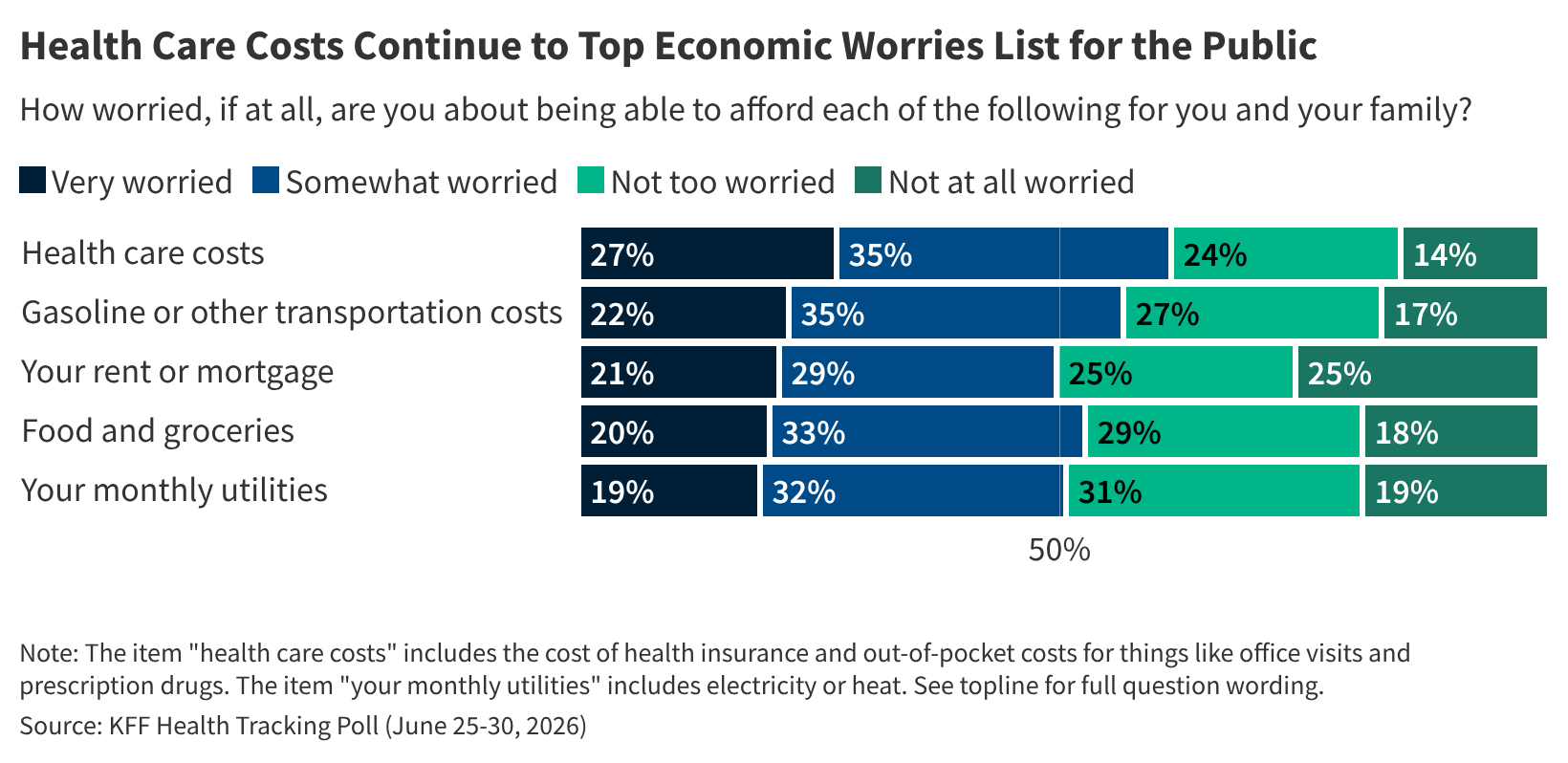
- In June, we asked voters: “How WORRRIED [my emphasis] are you about being able to afford each of the following for you and your family,” and gave them a list to choose from including health care costs, gas, rent and mortgage, food, utilities, and so forth. Health care costs were clearly the number one worry, as we reported at the time, followed by gas and rent and the mortgage, but worries about everything were reasonably closely clumped together:
Gallup asked a similar worries question and got a similar result: the “availability and cost of health care” was the public’s top worry, followed by the economy and inflation.
- On other hand, in late spring, CNN asked voters to say in their own words what “the biggest economic PROBLEM [my emphasis] was facing their family.” General cost of living was named most often, with food, gas and housing well ahead of health costs. People see these costs more frequently but may worry about them less than they do a big health care bill. However, when gas prices and food costs or housing costs rise, it can also make it tougher for families to pay their health care bills, underscoring that a family budget is made up of interconnected parts and a bottom line, even as pollsters often try to rank them on a scorecard.
- We also asked a different question in our polls: What issues do you want to hear the candidates talk about in health? Health care costs emerged as number one, followed by the future of Medicare, fraud in government health programs, and then the future of Medicaid.
Why does this matter?
First, be alert that the various polls are asking different things about health care when you see issue rankings: worries, problems facing people, problems facing the nation or for government to address, and what candidates should be talking about, are all different things that will get different answers and rankings from the public.
Second, both worries about unexpected health care costs and problems paying health care bills are motivating voter concern about health care. For candidates, appealing to worries is likely the smarter course that broadens the net of concerned voters.
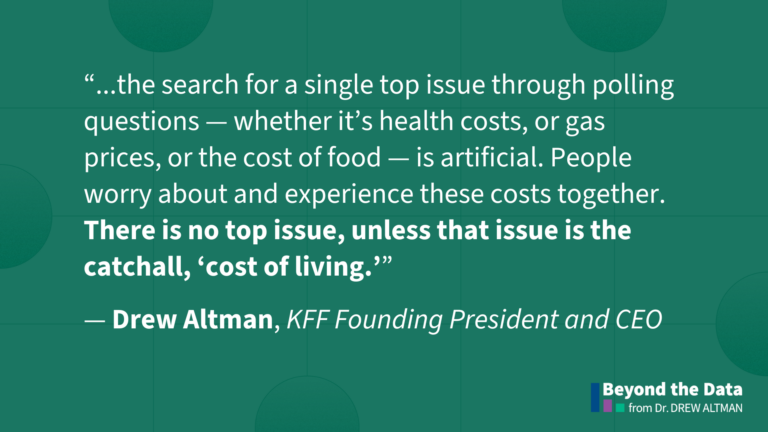
Finally, voters clump health costs with a series of other problems and worries about their family budgets. I have come to the conclusion that the search for a single top issue through polling questions—whether it’s health costs, or gas prices, or the cost of food—is artificial. People worry about and experience these costs together. There is no top issue, unless that issue is the catchall, “cost of living.”