rewrite this content and keep HTML tags
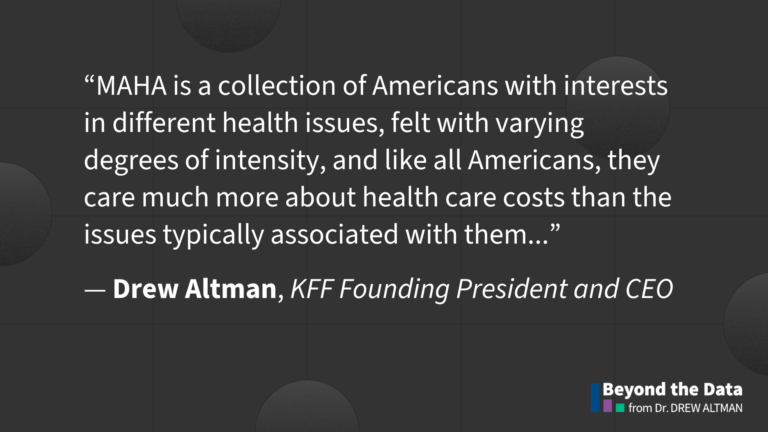
Make America Health Again (MAHA) is led by influencers and commentators and Secretary Kennedy and through that vanguard, it has influence, but the MAHA movement is not a monolith, and it may not be a movement. MAHA is a collection of Americans with interests in different health issues, felt with varying degrees of intensity, and like all Americans, they care much more about health care costs than the issues typically associated with them or with Secretary Kennedy.
This matters because with so many different issues in the MAHA stew, they are not likely to behave as a block on policy issues or in elections. Nor will Secretary Kennedy likely be able to control or deliver them as a group; just parts of MAHA who support him most strongly, which looks like about a third of MAHA supporters.
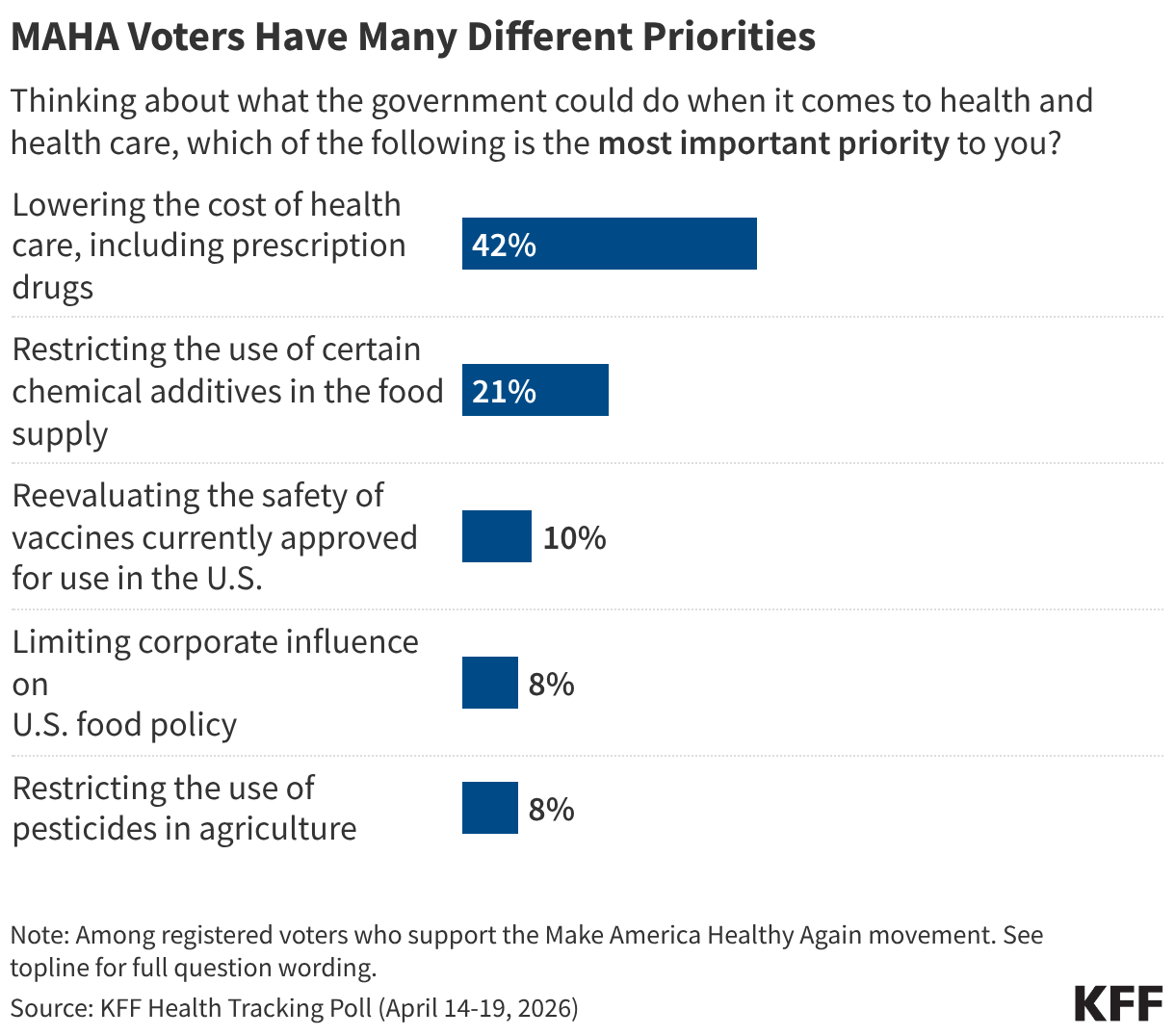
The chart tells the story. Twice as many MAHA voters (42%) say lowering health care costs is their top priority for government than say that about their next highest health priority, which is restricting food additives (21%). Vaccines are down the list, picked by just 10%. One issue, pesticides, was picked by 8% as the top priority. That’s an example of an issue that generates considerable intensity from an influential minority. Raw numbers don’t always equal influence.
One big take-home message: it’s not the case that MAHA and Republicans have unlocked a key to voters by focusing on “health” while Democrats focus on coverage and costs; MAHA voters are also focused on costs and affordability. MAHA influencers and leaders are not generally focused on costs and affordability, except occasionally to assert that a healthier population will bring costs down. How many will vote their party (most are Republicans), or the issue (health costs, on which Democrats have a significant advantage) remains to be seen. About one in five MAHA supporters are Democrats.
A second take-home message: there appear to be many MAHAs, not one. You can care about pesticides, or food additives, or vaccines, or child health, or corporate influence, or all of the above, to varying degrees. The reason so many Americans say they support MAHA when asked in polls is that, like a restaurant with a large menu, there is something in it for many Americans to select. But, the one thing they care about most—their health care costs—isn’t on the menu.